Salvation by Substitution: When the Soul Chooses Serotonin Over Spirit
There’s a low hum of restlessness that defines our modern age. It’s an ache in the soul. It is a quiet anxiety that follows us from the morning’s first scroll to the evening’s last binge-watch. We feel it in our endless striving, our search for meaning, and our desperate attempts to find peace. We know we are thirsty, but we have become experts at quenching that thirst with saltwater.
This deep spiritual thirst is not a flaw; it’s a feature. It’s the homing signal of the human soul, designed to point us toward God. The tragedy is that we’ve learned to misinterpret the signal. We diagnose a spiritual longing as a chemical imbalance. We treat it as a productivity problem. We turn to counterfeit saviors to silence the ache.
We are living in an age of salvation by substitution, but we are substituting the wrong things.
Counterfeit Comforts: The Broken Cisterns of Our Age
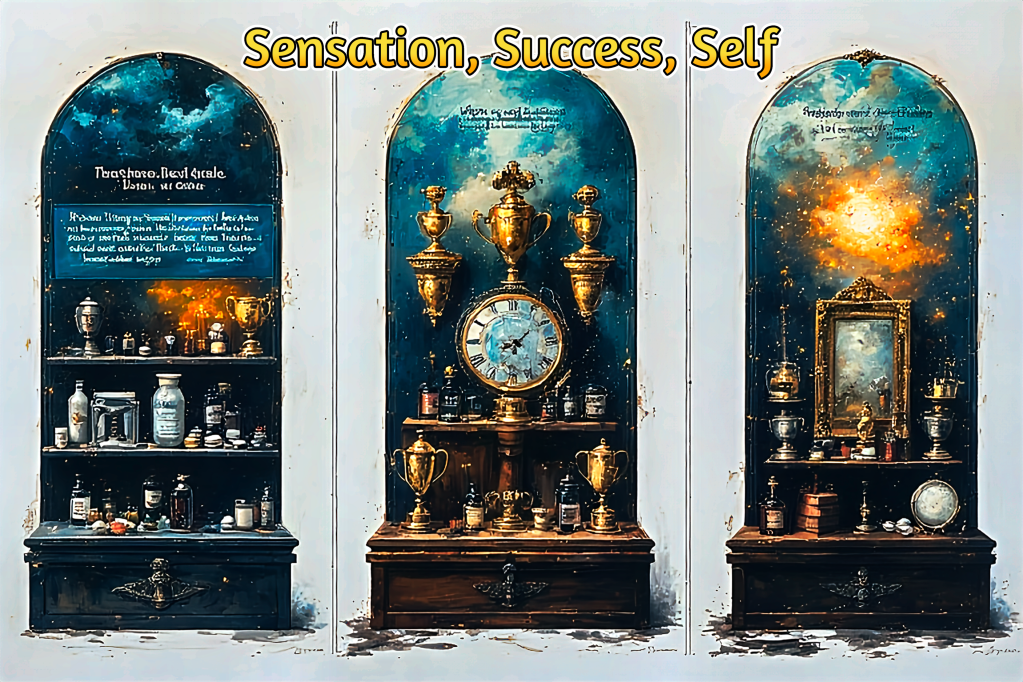
When the soul cries out for fulfillment, our culture offers a trinity of its own temporary fixes. These are the broken cisterns the prophet Jeremiah warned about—man-made wells that can never truly hold water.
Sensation: The quickest, most accessible substitute is the immediate hit of pleasure. This is the dopamine rush of a notification, the numbing effect of a substance, or the fleeting distraction of entertainment. Sensation offers a momentary reprieve from the ache. It is a form of self-medication that promises peace. However, it delivers only a temporary truce. It doesn’t quench the thirst; it just makes us forget we are thirsty for a little while.
Success: If sensation is a painkiller, success is the illusion of a cure. We are told that if we just achieve more, earn more, or become more, the restlessness will finally cease. We chase promotions, accolades, and personal milestones, believing that accomplishment can silence the longing within. But as anyone who has reached a long-sought goal knows, the satisfaction is fleeting. The void remains, sometimes feeling even larger than before.
Self: Perhaps the most pervasive modern gospel is that of self-optimization. We are commanded to look inward, to become our own saviors. Through rigorous self-care, mindfulness, and personal branding, the self becomes both the project and the deity. We worship at the altar of our own potential, but this inward-facing faith is exhausting. The soul, burdened with the impossible task of saving itself, only grows more weary.
From Ache to Anesthesia: A Modern Dilemma
The ancient psalmist knew this ache well. In Psalm 42, he cries. He says, “As the deer pants for streams of water, so my soul pants for you, my God.” He doesn’t try to numb or ignore his spiritual thirst. He names it, he acknowledges its source, and he directs his longing toward the only One who can satisfy it. His words are a lament, a prayer, a declaration of hopeful waiting.
Our culture takes a different approach. Instead of a lament, we are offered a prescription. Instead of directing our ache toward God, we try to manage it away.
Instead of naming the ache, we numb it.
Instead of waiting on God, we medicate the symptom.
Instead of thirsting for Living Water, we sip from the broken cisterns of serotonin and success.
This isn’t to dismiss the real struggles of mental health or the role of medicine. It is to say that we have confused a symptom—restlessness—with the root disease: a soul disconnected from its Creator.
True Substitution: The Heart of the Gospel
The language of substitution is not foreign to faith; in fact, it’s at the very heart of Christian theology. The gospel is the ultimate story of substitution, but it’s a redemptive one. It’s not about us finding a substitute for God, but about God providing a substitute for us.
On the cross, Christ took our place. He substituted His perfect righteousness for our sin, His life for our death. This is the great exchange, the divine reversal that offers true and lasting salvation.
The tragedy of our time is how we have inverted this beautiful truth. We have created a counterfeit doctrine of substitution. We attempt to replace the indwelling of the Spirit with a carefully curated chemical balance. We also use a polished public image or a perfectly optimized life. We are trading the infinite for the immediate.
Spiritual Restlessness and the True Cure
So how do we break the cycle? The first step is a correct diagnosis.
The Symptom: A persistent feeling of anxiety, restlessness, and a sense of “not-enoughness.”
The False Cure: Chasing more sensation, more success, or more self-improvement, which only deepens the thirst.
The True Cure: Turning back to the source of Living Water.
Jesus promised, “Whoever drinks the water I give them will never thirst. The water I give them will become in them a spring. It will well up to eternal life” (John 4:14).
This isn’t a call to simply “try harder” to be spiritual. It is an invitation to cease our striving. It is permission to stop trying to save ourselves. The cure for our restlessness is not found in what we can achieve. It is found in what has already been achieved for us. It is found in resting in Christ’s substitution, not our own.
Your soul’s thirst is not a problem to be solved; it is a signpost pointing you home. Stop sipping from broken cisterns. Turn to the One who is the fountain of life. In His redemptive exchange, find the rest, hope, and salvation you were made for.
Respectfully,
David A. Kitchens, The Inner Lens
Author’s Note
Please note that I have been diagnosed with clinical depression. As part of my treatment, I take prescribed medication to help manage and cope with the condition. Because of this, I recognize firsthand that the need for medication can be both real and necessary.
 The Inner Lens
Leave a comment